Showing posts with label fleas. Show all posts

Sunday, October 21, 2012

No Fleas Please!


Most of the leaves have fallen from the trees. The last of our tomatoes have been harvested and sit ripening (I hope) on the kitchen counter. The fields surrounding our farmhouse lay brown and dry. Flocks of geese crisscross the sky on their southward hunt for food. As the natural world settles in for the long winter ahead, it is easy to become complacent about parasite protection in our pets. But just as box elder bugs dot the sunny sides of our houses looking for a way inside, fleas are also on high alert for a hiding spot. If you are as unlucky as several of my clients in this fall, these fleas might just hijack your dog or cat.

The three flea cases we saw most recently were discovered during routine examination. The owners were taken completely by surprise by the discovery. It is very important to know that not all pets with fleas are itchy, just as not all itchy pets have fleas.

The first two cases were canine housemates. While I examined the head of one of the dogs, the owner nonchalantly asked what kind of tiny bug it was she just saw swim through the fur on the back end. Fleas can be tricky little buggers. They usually aren’t seen bouncing off the pet as in cartoons. In fact, more often than find fleas, we will find “flea dirt” on the pet’s skin.
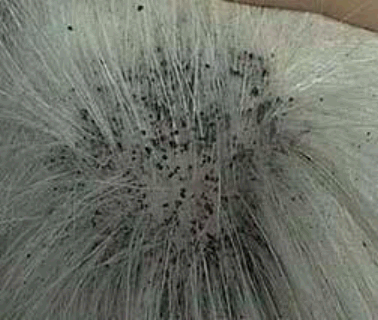
The many black specks seen on this cat's back are flea dirt.

Flea dirt is the digested blood meal taken from the pet. Flea dirt is flea poop. A special fine toothed comb is used to brush through the pet’s fur and collect flea dirt (and sometimes fleas). When wet, the flea dirt turns back into blood making diagnosis grisly but firm. Both dogs in this family were covered in flea dirt, suggesting the infestation was fairly long standing. Yet neither dog was itchy, missing any hair nor had any sores on their skin!

The other surprising case involved a puppy presented for a spay. Several fleas were found while her abdomen was clipped for surgery. She did not have any noticeable flea dirt, so we suspect her infestation was quite recent. Much to our dismay, her disbelieving owner was certain she must have gotten fleas in the clinic. Indeed anywhere animals congregate there is risk of fleas and other infections being shared. This is why I strongly urge my clients to apply flea and tick preventative to their pet before taking them to the kennel for boarding regardless of the quality of the kennel. However, the likelihood that this puppy caught several fleas during the brief time she spent alone in her stainless steel kennel awaiting surgery is quite low. In fact, it was later learned that her hunter owner had briefly brought a flea-ridden dead animal into the house. (Fleas flee dead animals quickly making it even more important for hunting dogs to remain on a preventative throughout hunting season!)

Flea eggs and flea dirt (poop) in carpet beside the head
of a pin.
Many pet owners justify not using a flea product because they believe if fleas were present they would have been bitten themselves. Fleas do bite people if the opportunity arises. The owner of one of my flea-infested feline patients explained she sprayed insecticides around her bed every morning because she kept finding bites on her skin! Since treating all the cats in the home for fleas and doing environmental clean-up, the number of human bites are decreasing.

A diagnosis of fleas is relatively easy and satisfying to make. The treatment aftermath is something else entirely.

1.     Whenever we meet a pet with fleas, the clinic is vacuumed thoroughly to remove any fleas or flea eggs. Then we close down that examination room and spray all surfaces with an insect growth regulator (IGR). Our IGR spray kills adult fleas and halts reproductive development of immature fleas.
2.     The pet owner must undertake aggressive cleaning at home as well. This includes frequent vacuuming of all surfaces; laundering bedding in hot water and high heat drying; fogging, bombing or spraying with an IGR; and treatment of ALL animals in contact with the affected pet.
3.     USE EXTREME CAUTION AND CONSULT YOUR VETERINARIAN if using an over-the-counter product not specifically prescribed for your situation. Many products are deadly to cats, while another product very well tolerated by dogs and cats is fatally toxic to rabbits!
4.     When fleas persist it is not generally insecticide resistance but failure to use effective flea products as directed. Did you remember to treat your cousin’s beagle  who hangs out at your place every few weeks? Did you remember to treat your own pets every month for at least 3 months? Certain stages of the flea cannot be killed so if you stop treating before these flea babies have matured and are susceptible to killing, you will have a perpetual flea problem.
5.     Rabbits and rodents are notorious flea reservoirs. If you have a lot of rabbits in your yard, your pets are at high risk of wandering into the flea circus at some point. Removal of rabbits and their dens as well as outdoor insecticide treatments are helpful in the control of fleas on your pets.

Fleas carry all sorts of diseases. Ever heard of the Plague? This devastating historical disease that decimated European human populations during the Middle Ages still crops up from time to time, even in the United States. Fleas carry a tapeworm that dogs and cats contract from ingesting the fleas crawling on their skin. Cats also can acquire a dangerous form of infectious anemia caused by a flea-borne microorganism.

Prevention of disease is always the best medicine. Avoid a case of the heebie-jeebies by using a flea preventative in your pets. A few dollars a month spent on a good preventative is a reasonable insurance investment. Your pet's comfort and safety as well as your sanity may be at stake!

Sunday, January 29, 2012

Is it seizures? Nope, just a bad case of fleas!

I currently have the sweetest old kitty in my hospital for rabies quarantine. Here's how that came to be...

When a dog or cat bites a person and that animal is not current on its rabies vaccination, that animal has to be quarantined for 10 days in an approved facility such as a veterinary hospital or animal shelter (at a considerable expense to the owner). During this time, the pet is examined three times by a veterinarian for any signs that it may indeed have rabies. If there are signs of rabies the person bitten will need to have preventative rabies treatment to save his or her life.

The cat in my hospital, Chatterly*, bit his owner during a "seizure" and I performed the first of his three rabies examinations early this week. I was particularly worried that this cat may indeed be rabid because he was having neurologic symptoms at home, so I questioned the owners closely. Turns out Chatterly has no recent vaccine history, he has been having "seizures" for some time, and although he was an indoor cat, he had escaped to the great outdoors during the previous summer for several weeks.

As I watched Chatterly walk around the exam room, I noticed him crouching strangely as if he were weak in the back legs. He was missing a bunch of hair on his back as well. When I touched his back, he began twitching uncontrollably and almost fell over -- a typical "seizure" for him. Chatterly was absolutely crawling with fleas!

I just about laughed out loud with joy and amazement (actually, I think I did laugh which was probably bewildering to the owner). Chatterly wasn't having seizures, he was itchy beyond belief! And that weird crouching? I haven't run any blood tests yet, but I suspect he's very anemic from blood loss (or possibly even feline infectious anemia)!

Legally, Chatterly still needed to be quarantined and examined for rabies, but first we cleaned him up and treated him for fleas. He and his feline companion at home will need a monthly flea treatment for at least three months in a row. The owners were instructed to wash all the bedding in hot water, vacuum all the carpets and furniture weekly for several months and consider using a flea bomb or spray as well.

The most shocking part of this story -- aside from a mild mannered senior cat biting his well-meaning owner because he was out of his mind itchy -- is that Chatterly is one of two patients I've seen this week with fleas.

In January.

In Wisconsin.

Chatterly probably has had fleas on him since his outdoor hiatus this summer. It is unclear how or when my other patient, a geriatric canine, acquired fleas. The point is that we Wisconsinites often become complacent in the winter about continuing flea and tick treatments on our pets. And we almost never think of it for our supposedly indoor only cats! Many veterinary dermatologists recommend year-round flea prevention for pets with allergies because a single flea bite can set off a horrible cycle of itching and infection. Chatterly is the second patient I've met who was so itchy he appeared to be having "seizures."

In general, if your pet is an allergy sufferer, you should keep him on year-round flea prevention. The same applies if your pet vacations with you in Florida and other warm climates. Those of you with a large rabbit or rodent population and pets that catch or munch them, should consider year-round flea prevention as well. In the end, it's cheaper and easier than the complications associated with itchy, infested pets!


* Name has been changed to protect privacy.

Sunday, October 23, 2011

So You've Been Adopted by a Stray Kitty. Now What?


Larry, Day 1
Heading into the clinic after lunch Friday, a strange baby cry greeted me by the back door. A tiny, bedraggled kitten ventured toward me. Cautiously I picked him up. Immediately his little velcro claws stuck to my shirt and a disproportionately loud purr began. I was hooked.

Has this happened to you yet? So many of my feline patients began their lives as strays, the arrival of little Larry seems like a perfect time to discuss how to bring a stray into your home.

1. When interacting with a stray cat (or any unknown animal), use caution! He may not be used to being handled and could bite or scratch out of fear. Rabies does affect cats, and many do not exhibit the classic Cujo signs of rabidity.

2. If the stray is amenable to being handled, make a veterinary appointment for him as soon as possible. Until then, keep him quarantined from your other pets to limit transmission of contagious diseases and parasites. Best not to let your children play with him either until he passes veterinary inspection.

3. Fleas are very common on strays. Poor Larry was covered in them. Where the black pellets of "flea dirt" (i.e., flea poop which is digested blood) had gotten wet, his white patches of fur were stained red! I DO NOT RECOMMEND GIVING A FLEA BATH. The chemicals in flea shampoos can be toxic--especially in cats and debilitated animals (which most strays are). Call your veterinarian for alternatives to flea baths.

4. After handling your new stray or his litter box, wash your hands thoroughly. If you have other cats at home, you may want to change your clothes after handling the stray to avoid transferring contagions.

At your stray's first veterinary check-up here are some things to expect:

1. The stray should be scanned for a microchip. Some strays are actually lost pets. The rightful owners will be grateful to know he has been found safe and sound!

2. Especially if you have other cats at home, a Feline Leukemia Virus (FeLV) and Feline Immunodeficiency Virus (FIV) test should be done. This is a simple blood test that can show if the stray has these viruses. Inadvertant introduction of theses viruses into your existing cat household can be devastating.Your veterinarian can explain the details of the diseases and testing.

3. The stray should be dewormed according to your veterinarian's protocol. Aside from tapeworms, most intestinal parasites are not readily obvious in the stool. Assume all strays have worms. After all, if the cat was eating rodents to survive he surely has worms!

4. Your veterinarian can treat the fleas, ticks, ear mites, lice or other external parasite(s) found. Be sure to ask if you need to clean where the kitty has been hanging out at home. Many parasites can only be eliminated after multiple treatments plus environmental decontamination.

Larry, Day 3
5. Many strays have upper respiratory infections stemming from common feline viruses. Your veterinarian may recommend vaccinating against feline distemper to help prevent complications from these infections. Depending on the stray's estimated age, your veterinarian may recommend the rabies vaccine as well.

6. Once your new kitty has been determined to be in good health, it is time to consider sterilization surgery. It is easy to tell if an adule male cat has been neutered, but much harder to tell if an adult female has been spayed. Spaying and neutering not only eliminates unwanted litters, but reduces unpleasant behaviors and future health problems.

Now that your stray kitty has a clean bill of health, you can settle down to enjoy the rare pleasures that come from feline companionship! You have been chosen by this kitty to provide the care necessary for his comfortable life. If your stray is like most I've met (including Larry), he is overflowing with affection and devotion.