Showing posts with label plaque. Show all posts

Sunday, October 21, 2012

No Fleas Please!


Most of the leaves have fallen from the trees. The last of our tomatoes have been harvested and sit ripening (I hope) on the kitchen counter. The fields surrounding our farmhouse lay brown and dry. Flocks of geese crisscross the sky on their southward hunt for food. As the natural world settles in for the long winter ahead, it is easy to become complacent about parasite protection in our pets. But just as box elder bugs dot the sunny sides of our houses looking for a way inside, fleas are also on high alert for a hiding spot. If you are as unlucky as several of my clients in this fall, these fleas might just hijack your dog or cat.

The three flea cases we saw most recently were discovered during routine examination. The owners were taken completely by surprise by the discovery. It is very important to know that not all pets with fleas are itchy, just as not all itchy pets have fleas.

The first two cases were canine housemates. While I examined the head of one of the dogs, the owner nonchalantly asked what kind of tiny bug it was she just saw swim through the fur on the back end. Fleas can be tricky little buggers. They usually aren’t seen bouncing off the pet as in cartoons. In fact, more often than find fleas, we will find “flea dirt” on the pet’s skin.
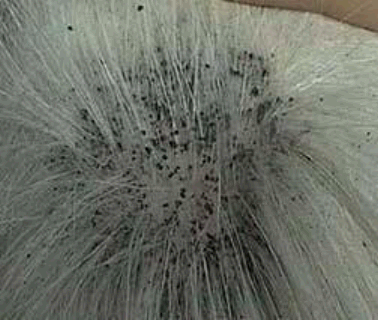
The many black specks seen on this cat's back are flea dirt.

Flea dirt is the digested blood meal taken from the pet. Flea dirt is flea poop. A special fine toothed comb is used to brush through the pet’s fur and collect flea dirt (and sometimes fleas). When wet, the flea dirt turns back into blood making diagnosis grisly but firm. Both dogs in this family were covered in flea dirt, suggesting the infestation was fairly long standing. Yet neither dog was itchy, missing any hair nor had any sores on their skin!

The other surprising case involved a puppy presented for a spay. Several fleas were found while her abdomen was clipped for surgery. She did not have any noticeable flea dirt, so we suspect her infestation was quite recent. Much to our dismay, her disbelieving owner was certain she must have gotten fleas in the clinic. Indeed anywhere animals congregate there is risk of fleas and other infections being shared. This is why I strongly urge my clients to apply flea and tick preventative to their pet before taking them to the kennel for boarding regardless of the quality of the kennel. However, the likelihood that this puppy caught several fleas during the brief time she spent alone in her stainless steel kennel awaiting surgery is quite low. In fact, it was later learned that her hunter owner had briefly brought a flea-ridden dead animal into the house. (Fleas flee dead animals quickly making it even more important for hunting dogs to remain on a preventative throughout hunting season!)

Flea eggs and flea dirt (poop) in carpet beside the head
of a pin.
Many pet owners justify not using a flea product because they believe if fleas were present they would have been bitten themselves. Fleas do bite people if the opportunity arises. The owner of one of my flea-infested feline patients explained she sprayed insecticides around her bed every morning because she kept finding bites on her skin! Since treating all the cats in the home for fleas and doing environmental clean-up, the number of human bites are decreasing.

A diagnosis of fleas is relatively easy and satisfying to make. The treatment aftermath is something else entirely.

1.     Whenever we meet a pet with fleas, the clinic is vacuumed thoroughly to remove any fleas or flea eggs. Then we close down that examination room and spray all surfaces with an insect growth regulator (IGR). Our IGR spray kills adult fleas and halts reproductive development of immature fleas.
2.     The pet owner must undertake aggressive cleaning at home as well. This includes frequent vacuuming of all surfaces; laundering bedding in hot water and high heat drying; fogging, bombing or spraying with an IGR; and treatment of ALL animals in contact with the affected pet.
3.     USE EXTREME CAUTION AND CONSULT YOUR VETERINARIAN if using an over-the-counter product not specifically prescribed for your situation. Many products are deadly to cats, while another product very well tolerated by dogs and cats is fatally toxic to rabbits!
4.     When fleas persist it is not generally insecticide resistance but failure to use effective flea products as directed. Did you remember to treat your cousin’s beagle  who hangs out at your place every few weeks? Did you remember to treat your own pets every month for at least 3 months? Certain stages of the flea cannot be killed so if you stop treating before these flea babies have matured and are susceptible to killing, you will have a perpetual flea problem.
5.     Rabbits and rodents are notorious flea reservoirs. If you have a lot of rabbits in your yard, your pets are at high risk of wandering into the flea circus at some point. Removal of rabbits and their dens as well as outdoor insecticide treatments are helpful in the control of fleas on your pets.

Fleas carry all sorts of diseases. Ever heard of the Plague? This devastating historical disease that decimated European human populations during the Middle Ages still crops up from time to time, even in the United States. Fleas carry a tapeworm that dogs and cats contract from ingesting the fleas crawling on their skin. Cats also can acquire a dangerous form of infectious anemia caused by a flea-borne microorganism.

Prevention of disease is always the best medicine. Avoid a case of the heebie-jeebies by using a flea preventative in your pets. A few dollars a month spent on a good preventative is a reasonable insurance investment. Your pet's comfort and safety as well as your sanity may be at stake!

Saturday, December 24, 2011

All I Want for Christmas is My Two Front Teeth

This popular holiday song is a perfect Practical Pet Vet blog topic on Christmas Day. However, every day of the year veterinarians are confronted by toothless dogs and cats. Unfortunately there is no Kris Kringle Tooth Fairy waiting in the wings to deliver a second set!

As pets are living longer and are viewed as furry family members, dental care is becoming an increasingly important part of veterinary care. Aside from causing terrible breath, the oral bacteria associated with plaque enters the bloodstream and travels throughout the body to cause disease in the liver, kidneys, heart, brain, and elsewhere! Moreover, severe dental disease (bleeding gums, loose teeth, abscess) is known to be painful and decreases a pet's quality of life. Most owners don't recognize this change in their pet until after the pet has healed from a dental procedure. Then many report their dog or cat is acting like a puppy or kitten again!

As with most medical conditions prevention of dental disease is preferable to treatment. Regular tooth brushing is the best prevention. No, crunchy dry food is not going to do it. (If you ate nothing but carrots and corn flakes you would still need to brush your teeth and see your dentist!) Dogs and cats can learn to enjoy tooth brushing as a special treat or bonding time with you...ask your veterinarian for suggestions on how to do this. Certain treats and chewies will help reduce tartar, but some, like real bones, can actually break teeth so again check with your veterinarian.  There are many gels, sprays and water additives available through your veterinarian that can also help reduce the disease-causing bacteria in your pet's mouth. And for dogs there is an annual dental vaccine!

So what if your pet already has bad breath, severe tartar and missing or loose teeth? It's time for a dental procedure. No matter how nice your dog or cat is, sedation or anesthesia is required to properly clean the teeth and perform any surgical procedure. Some groomers offer tooth brushing or "cleaning" as part of their services. Any type of oral care your pet allows is great, but not even the best groomer on the calmest pet can clean the teeth below the gumline where the majority of tartar and disease resides. Cleaning the exposed part of the tooth above the gumline creates a nice smile and reduces halitosis but creates a false sense of security that all is well in the mouth!

Like people most dogs and cats over the age of 3 would benefit from preventative dental cleanings (yep, under sedation) at least once a year. Very small dogs (e.g., Yorkies, Maltese, Chihuahuas, etc.) ideally would have cleanings twice a year!

Some owners bring their pets in for dental cleaning and request that the veterinarian "not pull any teeth unless absolutely necessary." Oh, boy. Obviously, these people have never had to extract a fractured and painful but not yet abscessed and mobile tooth before. It is no walk in the park. Nope, veterinarians (the ones I know at least) would never extract a non-diseased tooth just to rack up the final bill! Really, it's not worth the effort.

The goal is to AVOID needing this many extractions!
However, this dog undoubtedly feels better without
the chronic toothache these diseased teeth caused!
If by the end of the dental procedure (or after lifelong dental procedures) your pet's smile is more toothless than toothy, don't fret too much. The missing teeth would have eventually fallen out anyway (with more pain, more chance of complications like retained roots and no antibiotic therapy), and your pet will probably still eat dry food. Most dogs and cats don't chew their food well with teeth (another reason regular dry food does not prevent tartar formation). I've even met some dogs with few remaining teeth who actually still enjoy gnawing their chewies!

If you've been told your dog or cat needs a dental procedure, here are some questions to ask your veterinarian:
1. Will my pet have pre-anesthetic blood testing done?
2. Do you expect my pet will need any extractions?
3. If my pet has extractions, what kind of medications will s/he go home with (pain relievers, antibiotics)?
4. What can I do at home after the dental procedure to keep my pet's mouth healthy?
5. Can I get an estimate for the dental procedure?

February is National Pet Dental Health Month. With the winter holidays behind us by then, February is the perfect time to focus on getting your furry family member scheduled for dental assessment and/or treatment!