Monday, January 22, 2018

"Does your cat eat mice?"

It's a question I ask frequently at preventative care visits, even in reference to indoor only cats.

The answer is usually a vehement, "Oh no. We don't have mice in our house."

Kitty and I exchange a silent, knowing look.

Sometimes the owner's answer is more ambivalent. "Well, she catches them, but she doesn't actually eat them."

Kitty's look says, Aren't my humans so cute when they're in denial?


Jimi Happy Hendrix quickly and efficiently devours a mouse he caught.

Unless the cat is also having gastrointestinal symptoms of occasional vomiting and colitis, I may not press the issue at this point. It's hard enough to convince most cat owners that not seeing mice is not proof they don't have mice breaking and entering their home. It's even harder for owners to accept that their bored-looking, lazy indoor feline might be a secret agent, snuffing out rodent invaders without their knowledge.
Having witnessed my own kitty efficiently gobble down an entire mouse in less than 60 seconds, not catching your cat in the act of ingestion and/or not finding half eaten mouse corpses is not a reliable indication of what your cat doesn't do. Indeed, I've always considered cats the most effective and user-friendly kind of mouse trap available!

The subject of what makes the best mouse trap came up recently when we discovered evidence of a rodent invader in our break room kitchen. Finding a partially eaten chocolate bar with teensy weensy tooth marks was proof positive we had a mouse in the house.

After we got over the collective horror of knowing a mouse had been scurrying over our silverware, we pondered how in the world a mouse got inside. Like most homeowners, it was hard for us to swallow the idea that we don't occupy an impenetrable fortress! And it's hard to admit that even very clean kitchens can sustain a rodent - at least for a while.


A "walk the plank" homemade mousetrap

Once we wrapped our heads around the fact we do indeed have a rodent problem -- even a single mouse is a problem in my book -- we turned our thoughts to how to eradicate the invader from our midst. Everyone had an idea ranging from sticky traps (see "It's Not a Deterrent, It's a Medieval Torture Chamber") to a homemade bucket of doom that reminds me of a terrible miniature version of the game show Wipeout. Loving and caring for animals on an instinctive and professional level made the idea of allowing our mouse pest to suffer by drowning or starvation unbearable. In fact, last summer the clinic staff rescued and released an injured field mouse found in the clinic parking lot. What if our uninvited guest was actually little Gus-Gus from last summer? (Highly improbable, I know.)
Putting out rat poison was a no-go for us for several reasons:
  1. Poison pellets have a tendency to wander away from the bait box, becoming a potential toxic threat to unintended animals like dogs. We didn't want to "drum up business" by inadvertently poisoning our patients.
  2. Worse, because traditional poisons bio-accumulate in birds of prey if they eat enough ailing tainted rodents, the newer bromethalin rat poisons work more quickly and devastatingly. Accidental ingestion of these newer poison baits by dogs and cats is terrifying because there is little that can be done to treat the toxicity! (see "Of Mice and Mayhem: A Rodenticide Story")
  3. Mice typically don't take the bait and die out in the open where you can easily clean up. On a purely selfish level, we were opposed to living with a foul-smelling decomposing rodent in one of our clinic walls.
While traditional mousetraps are messy and a bit scary to set up, they are a humane method of eliminating unwanted small rodents. There are modern variations on the spring-loaded wire and wood mousetrap, but this type of trap invariably works by snapping shut forcefully enough to break the mouse's back while he's grabbing the bait. The pros of this type of mousetrap include 1) death is instantaneous for the mouse; 2) the dead mouse is easily retrievable; 3) collateral damage is minimal for dogs and cats that set off the trap inadvertently. The downside is that you're left with a dead, sometimes mangled mouse in your living space.

In researching mousetraps for this blog, I learned there is a type of trap that quickly electrocutes any mouse who meanders through a pet and kid-safe corridor to the zapping chamber. This sounds like a humane method of execution, and the trap is reportedly easy to clean out. A downside is that battery operated units may not be reliable for long-term applications like vacation homes. I can just imagine the charge running out of the unit and the mice enjoying a free-for-all of the bait inside!

For animal lovers, an attractive option to discourage mice from wanting to share our space in the first place is an electronic device that emits an unpleasant sound audible only to rodents. Unfortunately, reviews of this type of deterrent method are not highly favorable. One major downside is that over time rodents become accustomed to the "noise" and just ignore it as they scurry about stealing your food, destroying your soft goods for nesting material, and excreting their hazardous wastes all over the place.

Dr. Kim finds our rodent invader caught safely in a live trap.
On a lark, we decided to implement the best kind of mouse trap we had at our disposal: a lovable, Siamese cat named Joey who came to work with his CVT mom that day. Although Joey did not accomplish his mission in the brief time allotted, it somehow felt fair and right to invite one of our domesticated companions to assist in the day-to-day struggle to keep rodents at bay. Cats need to hunt to live psychologically balanced lives. For many cats the hunt is an effortless, graceful exercise in patience, timing and athleticism. And, finally, as understanding of feline nutritional need evolves, rodent eating can be seen as a healthy, natural alternative to high-calorie, high-carbohydrate dry kibble. Encouraging predation behavior in our indoor kitties is a win-win situation. In the best case scenario, you won't even know your cat has been doing her job for you. With that possibility in mind, however, I do recommend occasionally deworming against tapeworms and other parasites.

Veterinary assistant Ashley Stanton releases our mouse pest.
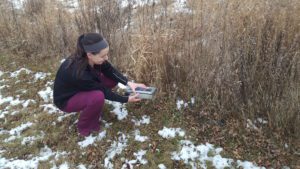
In the end, we resorted to a live trap loaded with some tasty bait. Once the mouse wandered into the inescapable chamber, we oohed and aahed over him a while before taking him outside for release. Although, the live trap instructions advise releasing the rodent two miles away, we didn't have that much time or motivation. At the edge of a neighboring field, we carefully opened up the trap lid and waited to see what would happen. That mouse didn't miss a beat! He hopped over the edge of the trap, scooted into the tall grass and burrowed into the snowy ground cover. Just like that, he was gone.

Will we regret our decision to catch-and-release this crafty rodent? Maybe. But for now, we're just glad to be rid of the little pest in a humane, mess-free way!

Friday, November 6, 2015

It's Raining Dragons!

It's not every day that reptiles drop in for care at St. Bernard's Animal Medical Center. In fact, up until now we have typically been called upon to treat scaly critters once, maybe twice, a year. But the word is out that associate veterinarian Dr. Robin Gibson has a special interest in reptiles, especially lizards, and is now offering wellness and sick exams for these scaly friends.  Within one short week, our reptile caseload drought turned in to a baby bearded dragon monsoon!  

Reptile Guests
by Dr. Robin Gibson, DVM

Reptiles have their own unique needs, especially when it comes to housing and food requirements. Sometimes if things aren’t “just right” they can come down with illnesses.  They can also be curious and
get themselves into trouble, or get hurt.  We are here to help you figure out the right lighting, heat, food, and moisture requirements for your reptile, and to get them back on the right track if something goes wrong.

Dr. Robin Gibson soaks the baby bearded
dragon in warm water to help with shedding.
One baby bearded dragon that we saw this week was having trouble shedding.  Little lizards are especially prone to retained shed.  Feet and tails are the most likely places, as was the case for this little guy.  If the skin on fingers and toes does not come off, it will constrict the digit and cut off blood circulation.  This is a serious problem for the toe!  If the blood supply is not corrected, the toe may turn black and fall off.  This little lizard started chewing at his foot as it turned painful or numb, in an attempt to remove the shed.  We saw him right away because some lizards bite their toes all the way off!   We soaked him in warm (not hot!) water to help moisten the old skin, and then gently rubbed and worked the shed off his feet and tail.  We put some antibiotic powder on each of his feet to help prevent infection.  If your lizards are having trouble shedding, you can also give them a warm bath for 10-15 minutes and gently work the skin off.  This will minimize their discomfort and prevent missing toes!


Another baby dragon we saw had a very serious condition.
This bearded dragon suffers from
calcium deficiency. With the exception
of her skull and jawbones (which
show up as appropriately bright white
on the x-ray image), nearly her entire
skeleton is lacking calcium needed
for strong bones and shows up
almost the same color as her
muscles and organs on the x-ray image.
This little one had deformed bones, including a crooked spine and tail, and a swollen toe.  Her hind leg had become paralyzed, and on x-rays her bones were severely decalcified.  She was also stunted in her growth.  These are all signs of metabolic bone disease, a calcium deficiency.  Calcium is important for bones, nerves, the immune system, and other functions.  This deficiency can happen from a lack of calcium in the diet, too much phosphorus, or not enough UVB light. Our little friend was receiving great care including a calcium supplement three times a week and UVB light at her current home, but must not have had these benefits in her previous home.  It is important to check out your little lizards when you first get them and monitor their bone growth in the early weeks and months, since they are more susceptible to metabolic bone disease during rapid growth. Unfortunately it was too late for this baby girl.  If metabolic bone disease is caught early and aggressive calcium supplementation is performed, your lizard has a better chance of recovery.  Look for these signs of metabolic bone disease so you can bring your little one in early:  stunted growth, swollen bones or joints, a rubbery jaw, crooked/bowed bones or spine, weakness or paralysis.


This little bearded dragon came in for a health
check up just like kittens and puppies do!
The other little bearded dragon we saw was happy and healthy.  He came in for a wellness exam, just like a puppy or kitten would.  We discussed his housing and food, and made sure that everything was set up for him to live a good long life.  Thankfully, many casualties can be avoided with proper care and keen eyes.

We hope you found this info helpful, and we look forward to meeting your scaly friend!

Eleazar (Zar for short) is a 6-year-old, 4-foot-long
iguana who shares Dr. Robin Gibson's home.
Dr. Gibson previously worked at a wildlife
rehabilitation center in the reptile department
caring for lizards, turtles, tortoises, and snakes.

Friday, October 30, 2015

Boo! Scary Eye Emergency

Proptosis - a veterinary eye emergency
No, it's not a Halloween mask.

And it certainly isn't a trick.

What's happened to this little dog is an eye emergency called "proptosis."

Essentially Ollie's* eyeball popped out of his head and became trapped in front of his eyelids. This is an emergency for Ollie because 1) it's very painful (hence the muzzle), and 2) may cause him to go blind in that eye.

How does this sort of thing happen? And what is to be done for poor Ollie?

 Proptosis happens most frequently in what we veterinarians call brachycephalic breeds ("brachy" meaning short and "cephalic" meaning head) like pugs and shih tzus because their large, protuberant eyeballs don't sit deeply enough inside their shallow eye sockets. Chihuahuas like Ollie are also highly susceptible to proptosis for this reason. Ironically, what makes Ollie's sweet baby face so irresistible also predisposes his eyes to serious injury.

Despite his skull's predisposing anatomic features, Ollie's eyeball did not just pop out of his head for no reason. Like other proptosis cases, Ollie experienced a sudden trauma which caused his eyeball to be forwardly displaced. Sometimes this trauma is caused by a fall or blow to the head, but oftentimes it results from a dog fight. Indeed, the morning of his injury Ollie instigated one too many altercations with his much larger husky housemate, Turbo. A quick snap from Turbo caught Ollie just right, causing his eyeball to proptose but remarkably causing no damage to his skull or skin. As the owner pointed out, if Turbo had meant to kill Ollie he would have. It was an accident pure and simple.

Fortunately, Ollie's owner was on the telephone with us immediately, it being pretty clear that Ollie needed emergency care for his bizarre looking injury. Intuitively, she recognized Ollie's vision was at stake, and he was clearly in pain.

An incision is made to create a larger opening in the eyelids so
the eyeball can be pushed back into the socket where it belongs.

After a rapid assessment, Ollie was placed under anesthesia for proptosis repair. His eyeball was rinsed with sterile saline to remove dust and hair, and a special stain called fluorescein was dripped onto his cornea (the clear, domed covering over the colored iris and black pupil) to assess for abrasions. Amazingly, his cornea was in great shape. Ollie hadn't even scratched at his protruding eyeball!

Next, because it was impossible to coax his eyeball behind his eyelids even after lubricating the globe, an incision was very carefully made at the outer edge of his eyelids to make the hole larger. This allowed us to push the eyeball back into place behind the eyelids.

Now to keep the eyeball in place! Once an eyeball has proptosed it has a tendency to pop out again. This is because the globe is swollen and the eyelids are a little weak. In order to keep the eyeball in place until swelling recedes, a procedure called "temporary tarsorrhaphy" is done. This involves suturing the eyelids shut over the eyeball for a period of time. Stents (little bits of medical rubber tubing) are used to prevent the suture from pulling through the skin. The sutures must be placed very precisely so they don't rub on the cornea underneath the eyelids.


Ollie needs to wear an e-collar constantly until the sutures
holding his eyeball in place are removed.
Ollie was started on medications to prevent infection as well as to reduce swelling and pain. A rigid e-collar (i.e., cone of shame) was placed immediately to prevent Ollie from rubbing at his eye. Ollie has to wear the e-collar continuously until the sutures are finally removed.

Possible complications from proptosis include blindness (especially if the time between injury and correction is prolonged) and increased risk for development of glaucoma, dry eye and corneal changes. Because Ollie still had vision in the injured eye at the time of correction and there was no visible damage to his cornea, prognosis for a full recovery is good.

Since his ocular emergency, Ollie has been doing very well at home; although he's madder than ever at Turbo! We have already removed one of the sutures -- the sutures are removed in stages to help keep the eyeball in place -- and Ollie appears to have vision through the slit created. Very soon, once the incision in the outer eyelid has had time to heal, we will remove the second suture and hope Ollie's eyeball stays put permanently.

Drs. Kim Everson and Robin Gibson celebrate a successful
proptosis repair while Ollie recovers.
(Assistant Ashley Norton gives him a complimentary
pedicure while he's still sedated!)
Proptosis is only one of many ocular emergencies affecting veterinary patients. While proptosis is a visibly obvious reason to seek veterinary care, other eye emergencies may be more subtle. As a rule of thumb, call your veterinarian right away if your pet has a very red eye or eyes; severe squinting; persisting elevated third eyelid (the fleshy membrane in the inside corner of the eye); noticeably different sized eyeballs; excessive yellow-green discharge; or any other signs of obvious pain or loss of vision.


* Names changed to protect the guilty!

Sunday, September 20, 2015

Snake in the Chair

It's not every day a snake gets lost in your living room chair. But then with unusual pets come unusual problems.

Friday night. It had been a long "short" week following Labor Day. All the urgent care cases we manage to squeeze into our already stacked appointment and surgery caseload always seem more numerous after a long holiday weekend, and this week was no different. The long weekend gives dogs an extra day to get sick from stealing fatty BBQ leftovers and to tear toenails while ripping around the countryside with their recreating owners!

After a late meal with my family, I was finally starting to decompress from this last hectic day. The kids were off playing video games together, the dishes were done, and I was seriously considering falling into bed with my latest book, Dakota Dawn. Then it occurred to me that I could watch the kids play their games and handle my 4-year-old corn snake. My creamsicle-colored corn snake Peaches is a very nice snake, about three feet long, mellow and easy to handle unlike my son's much younger albino corn snake (Phantom) who acts like a cobra any time you try to handle it! Peaches never strikes and, if she did, her tiny teeth wouldn't do much damage because corn snakes are constrictor-type snakes who squeeze their prey before eating.

As companionable as Peaches is, she doesn't demand attention--nudging a hand like my dog Guppy or loudly purring in my face like my kitty Cheeks. Safely contained in her giant terrarium, Peaches mostly curls up under her large hollow basking rock. On rare occasions, we marvel as she stretches herself along her tree limb or has staring contests with Cheeks who finds Snake TV pretty entertaining. (This spring we added a new "channel" for Cheeks' viewing pleasure -- Rat TV -- which is a lot more high action.) Pretty much the only time I handle Peaches is prior to feeding. We don't let her eat inside her terrarium to avoid accidental ingestion of her bedding as well as to keep her habitat cleaner. Because I worry that Peaches will begin to associate handling with eating and become more aggressive, a few quiet moments of contact for the sake of contact is a good idea.

Dr. Kim lures Peaches forward with a nummy mouse meal.

After extricating Peaches from under her rock, I settled into my blue recliner to relax. This, I thought to myself, is exactly what I needed: a full belly, laughing kids and some much-needed bonding with my unassuming reptile. Peaches slithered slowly around my forearms. She slithered so slowly, in fact, she seemed not to be moving at all. In reality, though, when I tried to arise a while later to put the kids to bed, I discovered Peaches had wiggled her way into the back cushion of the chair and I was holding just the hind third of her body! If you've never held a snake, you might not realize that holding the hind third is not holding much at all. You've got no leverage and the snake has the momentum. Accelerating from lassitude to full panic in record time, I called my son over to try to wrest Peaches' front end from the cushion while I applied traction to her back end, but it was too late. Peaches' muscular little body slid from my grasp in the "wild blue yonder" of the chair.

For some people, just imagining a snake hiding in the living room furniture is a wake-up-sweating nightmare. My biggest fear, however, was having Peaches sneak out of the chair and disappear into our old farmhouse where she might meet her demise by dehydration or predation from her biggest "fan" Cheeks. My snake book suggests tricks for catching a rogue snake. All involve laying traps around the baseboards because snakes tend to travel along the walls. Not only is my house such a colossal mess that reaching the baseboards is nearly impossible for me, but my old farmhouse also has snake-sized hidey holes in the floors and baseboards that a corn snake might happily disappear down before reaching a carefully laid snake trap. The fear of outright losing Peaches dissolved into dismay that I'd have to disassemble the blue chair to retrieve the snake as well as concern that if someone accidently lowered the footrest, she'd be a mashed mess inside the chair. With one hand grasping the part of Peaches I could still see, my son and I carefully set the chair on its side so we could assess the inner workings. Although we couldn't see Peaches any better this way, it made it easier to coax her slightly forward by "tickling" her back end.


20150911_215353
Dr. Kim coaxes
Peaches out of the chair
With her head just visible where the back of the chair meets the armrest, Peaches put on the brakes. This is when I remembered a trick that had, in the past, coaxed her as well as Phantom out from a fake hollow log in their terraria. Food. Since it was close to feeding time, I quickly warmed up a frozen fuzzy mouse in a cup of very hot water until it was "mouse body temperature" (the non-specific but very descriptive thermal requirement set forth in my snake books). Grasping the fuzzy's tiny hind feet with a long hemostat, I waved the meal in front of Peaches' flickering tongue. Luckily she took the bait and emerged about half-way. Teasing her with the mouse only went so far, however. She refused to exit the safety of the seat and grew weary of my "dangling mouse" trick, so I eventually relented and allowed her to eat dinner. By now, though, I was able to grasp the front third of her body and this is a much better position to be in. Although I likewise wearied of this drama and wished I'd gone to bed when the thought first crossed my mind over an hour ago, I was now fully committed to getting Peaches out of the chair. A snake who has eaten is a snake who will soon poop, and I did not want snake poop in my easy chair!

We carefully set the chair back upright and poked our fingers along the non-removable (grrr!) seat cushion to urge Peaches forward. After many dicey minutes waiting for Peaches to commit to slithering toward our second blue chair, she emerged sufficiently from the seat-back to be safely tugged free. As I dropped Peaches back into her terrarium and latched the lid tight, I breathed a deep sigh of relief that all ended well.  It just goes to figure that a crazy catch-up work week would end in a bizarre fashion, I thought to myself. As I hurried off to bed before any more weirdness could happen in the dregs of the day, it occurred to me that it had been a true "snake-in-a-chair" kind of day.

Wednesday, February 18, 2015

What I Did on My Winter Vacation

Whenever I manage to sneak my family and myself away from our regular life for a week during the winter, I feel I owe it to my clients, my children's teachers and myself to broaden my horizons in an educational way while soaking up some sun. I recently returned to frigid Wisconsin after visiting family near Cocoa Beach, Florida, enriched with vitamin D and the following unusual animal encounters.

We kicked off our trip by driving through the Merritt Island National Wildlife Refuge for a nominal park fee of $5.00. If you are a bird watcher, this is a must-do while on the Space Coast of Florida. Upon entering you receive a check list of migratory and resident birds that you might observe in the sanctuary. Although I'm no birder, I enjoyed identifying coots, pelicans, ibis, herons, egrets, osprey and grebes and simply appreciated the sheer number and beauty of scores of unidentified birds. We also drove past several Florida soft-shelled turtles, a few non-venomous water snakes and some alligators.

The most memorable alligator experience of our trip occurred on this outing when we drove past a
Dr. Kim Everson investigates a road-killed alligator
particularly large alligator lying strangely close to the highway on our way into the Refuge. When we observed the gator unmoved from this location on our exit, we paused to investigate. Having now witnessed numerous cold, sluggish alligators in Florida winter, I assure you a sleepy alligator basking in the sun and a dead road-kill alligator look remarkably similar. Neither may blink or appear to be breathing. Even blood on the roadway is no guarantee you've encountered a dead reptile rather than a recently feeding one! With an abundance of caution I approached the alligator, saddened but also relieved to find its skull had been crushed by an automobile and it was utterly dead.

Florida alligators are a huge tourist attraction in Florida inspiring both awe and fear. After being added to the Endangered Species list in the 1960s, the American alligator has been successfully restored to healthy numbers. And as fearsome as these giant "lizards" are (by the way, alligator is derived from the Spanish word for lizard "el lagarto"), it really is possible to co-exist peacefully with them. Since 1948, when records started being kept, only twenty people have been killed by alligators in Florida. What's more, alligators are being studied for clues into their remarkable capability to heal and fight off infections -- they may even help unlock a cure for AIDs.

Rhiannon shares The Dinosaur Store's gentle tegu,
a South American omnivorous lizard with Dr. Kim Everson
It was a close-up view of alligators that lured us into Cocoa Beach's The Dinosaur Store on a particularly chilly day, but what kept us there were reptiles of a different stripe and a friendly herpetologist, Rhiannon Bonine. I peppered her with questions about reptile genetics, husbandry and how to treat common ailments. Rhiannon and I chatted about the difference between albino and leucistic (aka color dilute) animals, the causes and treatment for stomatitis in snakes (sometimes these mouth infections occur after the snake is bitten by its rodent prey), and the difference in porosity between crocodiles and alligator skeletons (the small holes lighten their skeletal weight and aid their keen ability to sense swimming prey). The tail end of our energetic conversation turned to conservation issues ranging from efforts to protect endangered Florida panthers and Chinese alligators to efforts to eradicate invasive pythons and toads. The Dinosaur Store keeps a gigantic fat Bufo toad, which they've decided is female due to her remarkable girth (she looks to be about the size of a canned ham) and notable silence.

Dr. Kim Everson poses with a Bufo marinus toad, a
Florida invasive species and a poisonous pest to pets
Seeing live Bufo toads up close and personal at The Dinosaur Store and the Brevard Zoo was a real surprise and a treat. In veterinary school, our toxicology professor harped on the importance of understanding Bufo toad poisonings in pet dogs. Fortunately venomous Bufo toads are not found in Wisconsin -- our local toads just taste very yucky! The Bufo toad (Bufo marinus) is an invasive species in Florida, having been accidentally released near Miami in the 1950s after being used elsewhere to control grubs damaging sugar cane fields. Unfortunately, a Bufo toad loves to eat everything including native Floridian frogs and toads. Additionally, the milky toxin it secretes from the parotoid glands at the back of its head can kill dogs and cats that accidentally ingest the secretion!

Approaching an armadillo
Another topic in veterinary school that seems very exotic and unhelpful until you watch your son chasing it across a ditch is a leprosy-infested armadillo. Until this recent vacation, the only armadillos I'd ever seen were as are dead as raccoon on the Florida roadside. On this trip I watched my fearless eldest child stalk an armadillo, peacefully nibbling grass, near Kennedy Space Center. Besides being shocked to learn that armadillos hop like armored bunnies when slowly approached (in fact, the Aztecs called them "turtle-rabbits"), my family learned that armadillos can carry the dreaded bacteria which causes leprosy. Although now relatively rare and readily treatable, leprosy is a disease of biblical proportions that makes me loathe to get too close to a potential carrier.

At Clearwater Marine Aquarium, Dr. Kim Everson observes
physical therapy --tail  stretching exercises--performed
on Winter
One thing I've learned on my visits to Florida is that wildlife abounds, many times where you don't want it to. An entire industry exists to serve as ambassador between unwanted or injured animals and the public. For example, herpetologist Rhiannon Bonine described the work of Roaming Reptiles, an educational company which responds to emergency calls from concerned citizens with snakes in their homes that need to be carefully captured and relocated. Some of these snakes are venomous, but many are not. The beauty of such a service is that innocent but wayward reptiles are valued and preserved in the ecosystem. Another now-famous animal rescue and rehabilitation organization is Clearwater Marine Aquarium. During a 2012 visit, I was given an incredible behind-the-scenes tour of the facility that continues to rehabilitate "Winter," dolphin star of the two "Dolphin Tale" movies. While the goal of Clearwater Marine Aquarium (CMA) is to rescue stranded or injured marine animals, rehabilitate them through nutritional, medical and surgical care, and release them to their natural habitat, the CMA has on occasion taken in animals who will not survive back in the wild. Winter, the tail-less dolphin, is the most famous example, but my kids and I enjoyed meeting other permanent residents of CMA which include an otter named Cooper who was discovered in a Florida garage with partial hind limb paralysis (he can swim like nobody's business) and Harold, one of two blind sea turtles whose visual impairment is being aggressively studied for clues that may help understand vision-loss in wild turtles.

Dr. Kim Everson admires a sponge
washed up on a Clearwater beach
The last and least likely animal I learned about on my winter vacation is the sponge. Yup. Sponge. Like the sponge with which you wash your car. Sponges are multicellular invertebrate marine animals which do not have digestive, circulatory or nervous systems. Anyone who has seen a sponge will agree they consist of pores and channels through which water is channeled to exchange nutrients and waste products. As I walked along Clearwater Beach I examined a variety of washed-up sponges--finger sponge, stovepipe sponge, giant yellow sponge... Meeting one of the most primitive animals ever is pretty cool, but after visiting the Sponge Docks in Tarpon Springs, Florida, I have an even greater appreciation. The use of sponges in daily life is documented back thousands of years but the harvesting of sponges has changed very little in all that time. Earliest sponge harvesting was accomplished by wading and swimming offshore to collect specimens. As this easy-to-reach population was depleted, sponge hunters became divers, peering at the seabed through glass bottom buckets from little boats then diving great depths to collect their harvest. Hardhat diving apparatus (those alien-looking round copper helmets right out of Creature from the Black Lagoon) revolutionized sponge collection allowing sponge divers to remain on the seabed for significantly longer periods of time. SCUBA has mostly replaced other forms of diving, but once the sponge is on the boat processing remains the same as it has been for centuries! The sponge fishermen process their catch by rinsing and pressing the sponges repeatedly to remove seawater and slimy sponge goo, then they string them by type and size on long "needles" which hang all along the ship to dry. Back at the sponge docks, the sponge are sorted, trimmed and sold in batches at auction. Different species of sponge are valued for different cosmetic, household and decorative uses. Although sponge is a renewable resource, sponge fishermen must adhere to strict rules about the size of sponge that can be harvested and how to collect sponge without destroying the animal's ability to regenerate.

Vacations are how we humans regenerate, er...re-energize? And the best vacations, in my opinion, are those during which you learn something new. On my recent winter vacation I enjoyed seeing the Florida world -- sponges and snakes, alligators and armadillos, toads and tegus --  through my inner child's wondering eyes as well as my veterinarian's analytic ones.


In loving memory of my uncle Ed Hansen, who loved his farm animals, 
but also took time to travel the world with his beloved family.

Wednesday, December 24, 2014

Please Stop Leaving Animals on Roadways

In the past two weeks at least five dogs have been abandoned near the intersection of Highway 41 and County Road N in the Town of Eldorado. Two of these dogs were exceptionally frightened and not easily rescued from the edge of the busy roadway. The most recently captured canine is recuperating in my veterinary clinic after receiving two terrible blows from tranquilizing darts today.
My staff has named her Penelope. She is fighting for her life. I am very angry.
Monday throughout the day, numerous clients reported seeing a dog on the side of the road a short distance from the clinic. Our local animal control officer was on the scene, offering food and attempting to lasso the terrified dog. All her attempts to lure or leash the stray failed, and at one point during the day the stray disappeared from the scene. This morning we received notice that law enforcement (who had been involved in the previous day's unsuccessful rescue efforts) had requested the aid of tranquilizer darts to finally secure the stray. By this point a young lady had been sitting on the shoulder in the December drizzle for hours trying to befriend the stray with treats. Her hands were red and puffy from the cold; the stray was as uncatchable as ever.
With veterinary assistant Ashley at the ready with a rabies pole, the officer carefully selected his smallest dart and fired the tranquilizer, hitting the stray squarely in the
Dr. Kim Everson providing care for timid Penelope, the darted stray dog found near St. Bernard's Animal Medical Center
hindquarters. Adrenaline, fear and pain surged through the dog. She was not going to succumb without a fight. She leapt up and frantically sought an escape. Officers and bystanders shouted and argued about what to do next. Anxiety about harming the dog competed with terror that she might cause a tragic traffic accident if she ran into the highway. As she clambered up the gravel underpass leading to the median between northbound and southbound lanes of Highway 41, another dart was fired which hit her in the abdomen just behind the ribcage. Her momentum carried her into Ashley's miraculously well-placed rabies pole loop. Secured, she finally dropped into a stupor allowing the officers to crate her for transport to my veterinary clinic.
On arrival the dog was dazed and bleeding lightly from two gaping dart wounds. After carefully arranging her in a warm, clean kennel, we discovered that she had a deceivingly deep wound into her abdomen from the dart. Although clinically stable, resting well and closely monitored, the poor dog may indeed be mortally wounded. Only time will tell if this stray has enough spirit to survive. She certainly has had the spirit to bewitch me and my staff --with her gentle brown eyes and slow-thumping tail. Even if she doesn't pull through, she now has a name--Penelope--and a legacy--this blog.
Penelope's sad story has inspired me to set down in writing the frequently repeated laments of the past few weeks. I do this in hopes of preventing a similar scene in the future.
1) If you find you can no longer care for your animal, PLEASE do not leave it on the side of the road. You may believe or hope your animal will be observed and rescued from the roadway, and many times they are. But the risk to animal and humans is tremendous. The obvious risk is the animal will be hit by a car and die. Most drivers faced with hitting an animal will swerve, increasing the chance of human casualty. A less obvious safety hazard involves potential rescuers on the shoulder or in the roadway. These Good Samaritans are often ill-equipped to control the flow of traffic and are far more focused on the animal than on their own safety.
2) While relinquishing an unwanted animal directly to a shelter incurs a sizable societal debt, abandoning an animal on the roadway exponentially increases the cost of care. Over the past 24 hours a number of private citizens and public servants spent considerable time, energy and taxpayer dollars trying to coax Penelope into captivity. Some readers may suggest these loose animals should be destroyed immediately to save time and money. However, we live in a day and age when such violence causes substantial outrage. I believe most people prefer a reasonable effort be made to safely secure a stray animal alive even though the cost is higher than a bullet.
3) While it is commendable that so many citizens want to lend a hand, recent events suggest that if there is already at least one person on the scene working to win the confidence of the animal it would be better to say a little prayer for her success and drive on. Several times during the attempted capture of Penelope and another timid dog in recent weeks, a well-meaning person stopped by the scene to offer advice or lend a hand--just as the leash was about to be tightened. The presence of the new person reliably startled the dog, thwarting the rescuer's best efforts up to that point far and making it that much more difficult to catch the dog.
4) The rescue, care and rehoming of abandoned animals takes a lot of time, money and effort. Someone has to pay for it and it is not always clear who that person or entity is. Many people volunteer their time and expertise to help homeless animals, but food, shelter, and medicines take money. The best assurance an unwanted animal will receive proper care and find a new home is by surrendering it to the proper authority--an animal shelter. Even if you can't be on the front line catching stray dogs, you can help in an even bigger way by donating time, money and supplies to your local animal shelter.
5) The dogs found recently near our intersection have all been puppies or adolescents. Some appear to have been littermates. It is not hard to believe someone might be overwhelmed by the cost of properly caring for two or more unexpected puppies. The answer is canine contraception! Let us make an increased effort to spay and neuter our pets to reduce the number of unwanted animals out there in the world.
If this story has a silver lining it is that for every unthinking jerk who abandons an animal on the roadway there are countless concerned citizens who will endure discomfort and inconvenience on behalf of this unknown friendless animal.

Saturday, December 6, 2014

Full Circle: A First Responder Invitation

It was about 8:00 pm on a mild December night. I had just steeped a cup of Tension Tamer tea and had serious plans to finally fold the laundry when two Town of Eldorado First Responders began pounding on my door. After corralling my four-legged body guard (an American Bulldog named Guppy), I opened the door unsure what was about to unfold.
Car crash scene near exit 106, Town of Eldorado. Photo reprinted with permission of Carlos Munoz Jr.
Car crash scene near Highway 41, Town of Eldorado. Photo reprinted with permission, Carlos Munoz Jr.
"There's been a car accident over there," the female First Responder rushed, jerking her head in the direction of flashing lights and sirens across Highway 41. She wore a helmet, heavy coat and reflective gear. A rumbling truck with flashing lights waited behind her. "A dog was in one of the trucks and was thrown around the vehicle. We don't know if it's hurt. Could you come and take a look?"
Immediately my mind began running through the possible scenarios of what I might find and how I could help. I looked down at my clothing. I was still wearing a dress and tights from attending a family funeral earlier that day. "Let me throw something else on," I said and ran upstairs to whip on jeans and a sweatshirt, a hat and winter boots.
Both First Responders waited at the truck for me. "Do you want to bring your own car," one asked.
"Actually, I need a lift. I don't have a car tonight," I answered.
Quickly I unlocked my clinic and hurried about gathering the first things that came to mind: stethoscope, otoscope/ophthalmoscope set (it'll serve as a flashlight if nothing else, I thought), a slip leash, towel and several muzzles in different sizes. I had no idea what kind of dog I was going to encounter or in what degree of pain. It would certainly be afraid. My hastily grabbed items felt inadequate, but I reminded myself that my job tonight was to assess a trauma patient and possibly preparing a pet for transport to an emergency facility. In any event, we could bring the dog back to my clinic for a better assessment and stabilization once it was removed from the scene. These doubts and rationalizations flitted through my mind rapid-fire as I clambered into the truck.
As we bumped down Ridge Road and turned onto County Road N, the pair of First Responders chatted easily with each other and tried to prepare me. "The people involved have already been evacuated from the scene," they said. "The dog is in the back of a truck. It began drooling heavily. We just don't know if it's hurt."
In no time, we arrived at the accident. As I opened the door and stepped onto the shoulder, I felt dazzled and disoriented by the red and blue and yellow lights flashing off the reflective gear of half dozen or more emergency personnel. It was an alien scene: diesel fumes and broken car smells, crackling radios and blinding lights, strangers and neighbors, adrenaline and apprehension. I noticed one vehicle disabled a ways off in the farm field facing the road, its front end damaged but headlights on. The First Responders pointed out a pickup truck in the ditch, its air bags deflated, driver's door open.
I cautiously approached the cab, sorting through the items in my pockets for the leash. A wide-eyed, big, blocky-headed white and brown dog sat in the passenger seat.
The use of a dog seat belt not only keeps a pet from interfering with safe driving, but also keeps a pet inside the vehicle in the event of an accident.
"Her name is Roxy," someone shouted to me. "She had been sitting in the front and was thrown into the back seat."
"Hi Roxy," I started crooning. "How are you feeling? Are you hurt? I bet you're scared. Do you want to come out?" As I chatted at the dog, I showed her the slip lead and attempted to place it around her head. The dog was too far away from me, and I worried she might be protective over the vehicle. I didn't want her to feel trapped and take a defensive position. "Does the passenger door open?" I asked a nearby Responder, never taking my eyes from Roxy, examining her from afar. She was breathing without increased effort, mouth closed. No visible blood on her. Sitting squarely on her haunches. Front limbs straight and weight bearing.
"It's locked," they said. I wanted Roxy to come out so I could examine her better.
As if she might understand me, I began reasoning with her. "You don't want to stay in there, do you? Why don't you come out so we can get you somewhere warm and safe." The dog didn't shy away from me as I reached toward her. Her body language indicated interest and confidence. More confident myself, I was able to slip the leash around her neck. With just a little prompting she crawled into the driver's seat.
Now I was trying to fit a muzzle on her, not sure if she was going to need help exiting the truck and afraid she might bite if my assistance incited pain. The muzzle was ridiculously large. Roxy looked at me disdainfully. "Okay, okay," I laughed. "Let's see if you can get down out of there yourself." I backed up and kept an encouraging amount of forward pressure on the leash. Roxy jumped daintily from the seat onto the gravel, all 80-some-pounds of her. She strained at the leash as I tried to get a better look at her eyes and ears and gums, cold dampness creeping through my denim as I kneeled on the crust of snow. As I ran my hands over her limbs and back, feeling for bumps and scrapes and watching for signs of pain, she leaned with all her might toward a trio of people standing several feet away. Heart and lung sounds good, no drooling, strong and alert. I stood up, handed the leash to a First Responder, and said, "She looks all right. Could use another exam in a better setting, but I think she'll be all right."
The First Responder thanked me and pointed the hand holding Roxy's leash toward the trio of people standing at the front of the truck. "That there is her owner."
Feeling more than a little stupid -- if I'd known that, I would have just had him get the leash on her and entice her from the truck -- I walked Roxy over to him myself. "American Bulldog?" I asked trying to break the ice. "She's beautiful. My own dog is an American Bulldog...don't see many around here." He nodded, distracted as the two officers finished their interview and administered last minute instructions on how to document any latent injuries. The guy looked shell-shocked and I couldn't blame him. I waited my turn for his attention. "Are you local? Do you have a regular vet?" I cringed inwardly; it sounded like soliciting. "I mean, you should have her looked at tomorrow morning," I blurted out. "Even if she seems okay." I gave him a list of things to watch for that would indicate emergency veterinary care should be sought right away.
I wandered back to my ride. My First Responders--my neighbors, my daytime clients--stowed their gear and turned the rumbling old truck toward my home. Feeling calmer I began to enjoy the mild December evening and the camaraderie of being a Local. It occurred to me suddenly that I'd come full circle. "You know," I mused, "over ten years ago I trained to be a First Responder. It's what inspired me to go back to school to become a veterinarian." I never even had had a chance to practice as a First Responder at the time, I thought, and now here I am a veterinarian on my first First Responder call. Ironic, isn't it?
The other irony in this story is that a mound of clean laundry continues to sit unfolded upstairs while I write this post.

Saturday, October 25, 2014

Ebola: A Veterinarian's Perspective

Who needs made-up Halloween horrors when this year a real-life monster is stalking the world? I'm talking about Ebola. It's a worldwide source of terror. You can't attend a high school football game or turn on the evening news without overhearing speculation, worry and opinion about the nightmarish disease. This virus of epidemic proportions has even affected the veterinary healthcare field. In Spain, an infected nurse's pet dog was destroyed by court order in an effort to control the potential outbreak; while in Texas, an infected nurse's dog has been placed under quarantine in military custody for 21 days (ending November 3rd) to observe for signs of infection.

Ebola Hemorrhagic Fever is a terrifying disease, and a healthy dose of fear is essential to stop a potential pandemic in its tracks. However, ignorance of the facts makes fearful things more dangerous. If we lose focus on what we know about the disease and how to control it, if we begin flailing around blindly in our effort to combat it we risk doing more harm than good.

In my effort to understand Ebola and explain it to my circle of friends, family and clients, I have learned some important facts. Let's start with the basics:

Ebola Hemorrhagic Fever (EHF) is a severe, contagious disease affecting humans and non-human primates
This cartoon character suffers from "the suds,"
a fictional virus withsymptoms not unlike influenza.
(i.e., monkeys, apes). Symptoms of EHF include fever, severe headache, muscle pain, diarrhea, weakness, abdominal pain, unexplained bleeding or bruising. These symptoms appear within 2-21 days after exposure (the average is 8-10 days). There is no cure for EHF, but with supportive care and good immune response patients can recover. Once recovered, the infected person is no longer contagious; however, Ebola virus has been detected in semen up to 3 months later making abstinence during this period important to controlling an outbreak situation.

EHF is caused by Ebola virus, first recorded in 1976 in Sudan and Zaire and named for the Ebola River in Zaire. There are five known strains of Ebola virus--ZEBOV, SEBOV, BEBOV, REBOV, TEBOV--each with different levels of infectiousness and deadliness. Of the various strains, ZEBOV (Zaire) and SEBOV (Sudan) appear to be the most dangerous to human health with fatality rates ranging from 53-90%.

There is much we don't know about how an Ebola virus outbreak starts, but researchers have discovered that the virus can exist in animals. Fruit bats are suspected to be a natural reservoir for the Ebola virus, meaning bats could carry and shed the virus but not be made sick by it. Monkeys and primates can be infected and spread the virus; Ebola virus is highly fatal in these animals. Human exposure has been documented after eating or coming into close contact with infected monkeys and apes.

In experimental settings, horses, guinea pigs and goats have been infected with Ebola virus and may develop mild symptoms of the illness. Pigs have been shown to become mildly ill from ZEBOV and can transmit the virus to non-human primates; there is no good data on whether pigs (or other domestic animals) can transmit the Ebola virus to humans. Researchers have questioned whether Ebola virus could be transmitted by biting insect vectors (such as mosquitoes), but solid evidence is lacking. Once a human has become infected through a "spillover event"--exposure to an infected animal--spread from person-to-person can occur rapidly.

Close contact with dogs is not currently
believed to be a risk factor for Ebola virus exposure
but precautions with pets in contact with confirmed
Ebola victims is likely to continue.
Scientific study of Ebola virus in Africa reveals that dogs can develop an immune response to Ebola virus. Dogs are exposed to the virus in the same way people are--by direct contact with contaminated bodily fluids via the eyes, nose, mouth, mucus membranes or breaks in the skin. Once the canine immune system detects the virus, it begins making antibodies against it. This does not mean the dog has become infected, however. Dogs have not been observed to become ill, and scientists have not been able to isolate Ebola virus from dogs who have been exposed. There is no evidence at this time that dogs are a source of infection for humans.

As disparaged as vaccination is in certain (very loud) circles, I have heard many concerned citizens ask hopefully about the development of an Ebola virus vaccine. It seems a reasonable request, and a strong assumption, that with enough funding and talent a vaccine can be readily developed to protect ourselves from this fearsome illness. Yet with all our medical and scientific advances, we have not been able to develop vaccines for many other deadly and debilitating viruses (including, for example, HIV) and not for want of trying!

People who have recovered from Ebola virus have been shown to have antibodies for up to ten years later. Antibodies are part of our immune system's natural defense against infection. Vaccination stimulates the production of antibodies without actually causing the disease to prepare our immune defenses against the possibility of exposure. In other words, through immunization, our immune system is given a "heads up" about a contagious disease so if it encounters it in the future the body's defense system is ready to destroy it rapidly. Not all antibody production is protective, however. People and animals exposed to Lyme bacteria, for example, develop detectable antibodies to the bacteria, but these antibodies do not prevent future infection. (Lyme vaccination in dogs works in a different way from other vaccines and is highly effective.)

Still, the World Health Organization has announced the release of two experimental vaccines against Ebola virus by the end of 2015. These vaccines will be administered to those on the front lines handling EHF outbreaks. The safety and effectiveness of the vaccines has not yet been proven, so officials warn it is no "magic bullet". Proper quarantining and protective gear will continue to be vital tools in the containment of this disease.

With public awareness and aggressive oversight by public health organizations, Ebola virus is unlikely to
Proper application of simple and proven contagion
control measures will reduce the spread of minor
and deadly viruses alike in the U.S.
become an epidemic in the United States. The attention this disease has aroused among researchers and financiers in recent weeks suggests we will be learning a lot about this deadly virus in a short period of time and "knowledge is power." As a veterinarian trained in infectious disease control, I was encouraged to learn the Ebola virus is not very hardy in the environment, remaining viable for hours as opposed to days or weeks. Also, Ebola virus is readily inactivated with common disinfectants. I do not mean to say less emphasis should be placed on the use of personal protective equipment (PPE) among health care workers simply because Ebola virus is fragile in the environment. Also I believe strict quarantining should be enforced as needed to control an outbreak. However, for most of us common concerned citizens, the practice of good hygiene including thorough and frequent hand-washing as well as common sense measures like avoiding school, work and travel when feverish or showing signs of "the suds" is the best protection against picking up and/or spreading minor colds or serious influenza much less Ebola virus.

Sunday, June 22, 2014

Who's Your Daddy? A Cat Reproduction Primer

Tis kitten season once again. Having a rural veterinary practice means this time of year many of my kitten exams involve baskets full of mewling, velcro-toed feline fur-babies. What is striking about these litters of kittens is how dramatically different the siblings are from each other: we might see a calico, a black-and-white tuxedo, several tigers in various hues and a long-haired tortoiseshell -- all from the same mother, or queen. In contrast to kittens from a cattery where matings are tightly regulated to achieve traceable genetics, kittens from farm cats and neighborhood strays have the potential for a very mixed up paternity. The reason for the physical variations among kittens of the same litter is very Jerry Springeresque: each kitten from the same litter, carried and born at the same time, can have a completely different father!

It's called "superfecundation" (kinda sounds like a Mary Poppins song!) and is a very common feline reproductive condition. Technically it means that during a single heat cycle two or more eggs become fertilized by different sires during separate matings. Superfecundation is not unique to cats as it can occur in litters of puppies and occurs with some frequency among human twins (talk about Jerry Springeresque!). However, special features of feline reproduction makes superfecundation almost inevitable.

Whereas canines generally go into heat only twice a year, felines are "seasonally polyestrus," meaning fertility is triggered by lengthening hours of daylight and fertile periods repeat multiple times during this season of longer days. Queens in the northern hemisphere generally only stop going into heat during late autumn and early winter.  Depending on the season, genetics and environmental conditions, puberty in young cats can begin as early as 4 months of age. A female kitty might find herself "in trouble" even though she herself is barely weaned!

As every farmer knows, when cats do start going into heat, it is an endless cycle of mating, pregnancy and kittens. In fact, cats can go into heat, or estrus, every 14-21 days. Pregnancy itself lasts about 60 days. Queens can become re-impregnated even while nursing a litter of kittens because many begin cycling again about 10 days after delivery. A particularly successful queen can raise up to three litters a year. In short, cats breed like rabbits.

But just because cats are ready to reproduce at the drop of a hat throughout most of the year is not what leads to kittens from different fathers (although it probably contributes). Cats are unusual among domestic animals in that they are "reflex ovulators." As opposed to most species (including humans) in which an egg or eggs are released during ovulation regardless of whether mating occurs, actual intercourse is almost always required to stimulate release of an egg from the feline ovary.

Feline ovulation relies upon a complex chain of reactions -- the vaginal-spinal-hypothalmic reflex -- triggered during copulation from sharp barbs on the tom's penis. During the three to eight day fertile period during a given estrus cycle, a queen might mate with a number of toms. Each mating might result in the fertilization of one or more eggs released in response to the copulation. A typical litter consists of four to five kittens. Theoretically, then, each might be only half-brother and half-sister to the others.

Because cats are so prolific, the supply of kittens is always greater than the demand for pets. It is a bittersweet feeling for a veterinarian to behold that basket of adorable, genetically fascinating feline offspring. While we love cuddling the cute little kittens as much as the next guy, we also wish for some kind of cheap and easy birth control for cats. In some countries outside the U.S. oral contraceptives are available, but because they have been shown to cause horrible uterine infections, breast cancer and diabetes in the queens they are considered inhumane and are banned here. So, at this time, we are left with ovariohysterectomy (a.k.a. spay) or removal of the female reproductive tract.

Trap, neuter, release (TNR) programs are available to control feral feline populations. By systematically
surgically sterilizing all the cats in a certain locale, you not only prevent them from breeding but also reduce the introduction of unsterilized cats into the "fixed" cats' established territory. Owners of pet cats must also take steps to remove their individual feline from the over-population problem by having it spayed or neutered as soon as medically indicated. All too often, owners who haven't prepared for the relatively minor cost of sterilizing one cat find themselves seriously financially overwhelmed with litter after litter of kittens, all of whom also begin reproducing at a prodigious rate. And no, cats do not care if the sire of her kittens is her brother or her father, so don't count on "that's gross" being an effective contraceptive in a home full of unfixed felines!

Although domestic cats do make wonderful companions with their strikingly beautiful feline features, charming personalities and funny behaviors, now you know where the term "catting around" originated!

Sunday, April 13, 2014

Cheyletiellosis: Night of the Walking Dandruff

Sorry to mislead you into thinking this blog was going to be about the ever popular zombie creature. It's actually about a different kind of monster, a microscopic mite commonly referred to as "walking dandruff" that likes to prey on bunnies. What better time to talk about mite monsters than Easter? What if the cute little twitch in Peter Cottontail's nose is because of an itch?

Meet "Lucky," a young rabbit presented to our veterinary clinic during the winter of 2014 because of a recently noticed skin condition. Lucky was missing large clumps of hair between his shoulder blades, and the area was covered in huge flakes of white dandruff. His physical examination was rather unremarkable besides his obvious skin disease. He did not even act that itchy, but his skin was quite red everywhere and the hair fell out easily anywhere you parted it.

The other rabbit in the home, kept separately, showed no symptoms of skin disease. The bunnies had been adopted over a year ago and had spent some time penned outside during the warmer months of 2013, but had no interaction with each other much less other animals.

Examination of the affected rabbit revealed a large amount
of dandruff, hair loss and red, irritated skin.
I suspected the "walking dandruff" mite even though no movement was seen in the flakes of dead skin. The official name for this parasitic insect is Cheyletiella and there are numerous species which can plague various mammals from rabbits to dogs to cats. Cheyletiella ("kai-la-tee-ell-a") are highly contagious and can even bite people, but they can't live on us for long. The mites tend to live on the animal's skin within the keratin level; they less commonly invade the nasal passages. The mites are fairly large as mites go, and their scurrying among the excess amounts of dead skin produced in response to irritation resulted in the nickname "walking dandruff."


Animals acquire Cheyletiellosis by direct contact with an afflicted animal in most cases. However, the mites and their eggs can also survive for a short period (days to weeks) within bedding and the environment, so transmission may occur via indirect contact as well. Some animals carry around Cheyletiella mites but don't show symptoms at all! 

At the center of the field are two Cheyletiella mites as well
as a large mite egg.
Definitive diagnosis of Cheyletiellosis in Lucky was swift and satisfying. I collected some dandruff from his back on the sticky side of transparent tape and applied the entire thing to a glass slide. At relatively low magnification under the microscope, I saw numerous mites and mite eggs amid hair shafts and epithelial skin cells.

In some cases, mite bodies and eggs may be seen during microscopic evaluation of a stool sample instead. This is a good way to diagnose Cheyletiellosis in cats. Because they are such fastidious self-groomers, infected cats often ingest the excess dandruff as well as the mites making diagnosis from physical examination alone more difficult.

Fortunately, treatment of "walking dandruff" is much easier than eliminating an apocalypse of the walking dead. Various treatments are available to kill Cheyletiella mites. Because rabbits are weirdly sensitive to certain topical insecticides--for instance, over-the-counter products containing fipronil, well-tolerated in dogs and cats for the treatment and prevention of fleas, are devastatingly toxic to rabbits--we selected topical prescription-only selamectin which has been used safely and effectively in rabbits for mites of various kinds.

Dr. Kim Everson applies a dose of medicine to Lucky to treat
his bad case of Cheyletiella mites.
In addition to thoroughly cleaning the hutches and surrounding environment as well as replacing the bedding and feed hay, we decided to treat the asymptomatic rabbit as well. Both bunnies will receive a small amount of medicine on the skin between the shoulder blades once a month for several months in a row. Any mite bites on the humans in the household are expected to resolve once the bunnies have completed treatment.

Shortly after the first dose of medicine, Lucky was reportedly showing signs of improvement in his skin. By now, he should be feeling fine -- just in time for delivering the family's Easter baskets!